From Mauritius #4: AfCRA on the Record
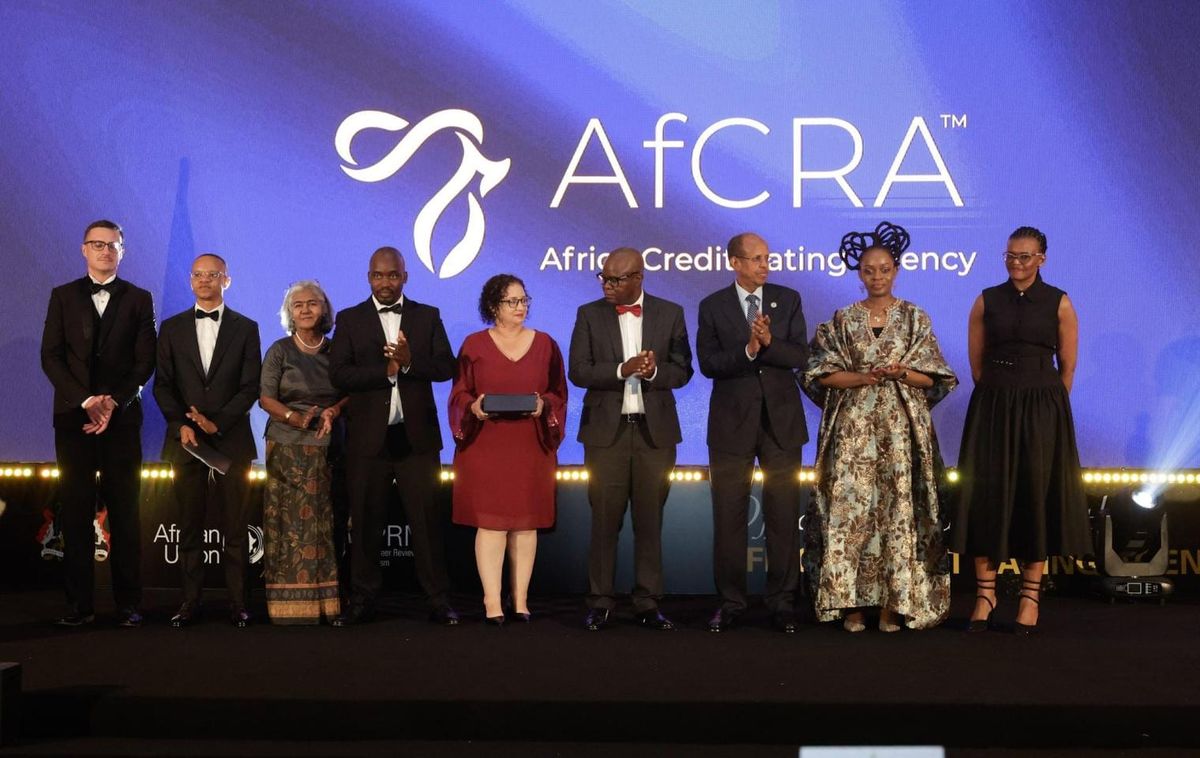
The launch moves the discussion from what the Africa Credit Rating Agency is meant to be to what its own published materials say is currently being built.
The Africa Credit Rating Agency launched in Port Louis on 7 October. For most of the time I have been writing about it, AfCRA has been an argument rather than an organisation. We debated whether the continent needed it, what problem it would solve, and how a new credit rating agency might ever earn the trust that the established firms took decades to accumulate. Those debates were necessarily about an idea, because there was little else to examine.
That has now changed. AfCRA has a public website, a team page, a description of its analytical architecture and a preliminary investor prospectus. In this last piece from Mauritius I want to set aside the question of what AfCRA is supposed to be and ask what its own materials allow us to establish about what has been built, what is proposed, and what cannot yet be known. I will not offer a verdict on its credibility. It is too early, and documents published at launch are not the kind of evidence on which such a verdict should rest.
Origins and stated purpose
The prospectus traces a short institutional history. In 2017 the African Union Assembly mandated the African Peer Review Mechanism (APRM) to support member states on credit rating matters. In 2023 finance and economic ministers endorsed a private-sector-driven AfCRA built on self-funding and self-sustaining principles. In 2024 the AU Executive Council endorsed its establishment and tasked the APRM with operationalising it.
The problem AfCRA says it addresses is one of coverage and depth. The prospectus states that 23 of the AU's 55 member states are not rated by any international credit rating agency, and it attributes to the APRM the figure that non-African agencies account for more than 70 per cent of ratings on the continent. Its stated purpose is to add analytical capacity where coverage, local data and contestability are uneven, and it is explicit that it does not set out to displace established agencies or presume that their opinions are wrong.
What I found most useful in the prospectus is a short list of things AfCRA says it does not claim. A rating does not mechanically lower a borrower's cost of capital. AU provenance does not substitute for analytical performance, regulatory recognition or investor acceptance. A coverage gap does not guarantee mandates. The website takes the same line, telling readers not to trust AfCRA because it is African but to trust it when its evidence, methods and performance warrant it. The governance page adds that the AU and APRM created the institutional opportunity but do not determine AfCRA's ratings. Whatever one makes of the institution, these statements set the standard by which it has asked to be judged.
Ownership and capital
The prospectus describes AfCRA as independent, privately owned, private-sector-driven, self-funded and self-sustaining, headquartered in Port Louis. The words 'self-funded' and 'self-sustaining' carry over from the 2023 ministerial language and are best read in that context: the model excludes government share ownership and does not rely on public budgets. In practice, the prospectus sets out a route to private capital.
The proposed transaction is a raise of US$15 million at the level of the Mauritius parent company, Africa Credit Rating Agency Limited. The share table shows 1,000 founding shares, all held by Plus 94 Research, a market research and data company based in South Africa. The proposal is to issue 2,000 new shares at an indicative price of US$7,500 each. On those figures the prospectus presents an implied pre-money value of US$7.5 million and an implied post-money value of US$22.5 million. After the issue, Plus 94 Research would hold 33.33 per cent and new investors, collectively, 66.67 per cent.
The prospectus is careful about these numbers. It says they are derived from the issue price and share count, that they are neither an independent valuation opinion nor a discounted-cash-flow conclusion, and that the pre-money figure is a negotiated transaction basis rather than a guarantee of fair value or liquidity. How the new investors' two-thirds would be distributed among them is not stated. Reserved matters, information rights, transfer restrictions, pre-emption, dilution protection, dividend policy and exit arrangements are left to a definitive shareholders' agreement. The document describes itself as preliminary and non-statutory, and as neither an offer nor a solicitation.
The group structure
The second structural element concerns South Africa. According to the prospectus, the Mauritius parent will, upon finalisation of its post-incorporation phase, proceed to acquire a 51 per cent economic interest in Africa Credit Rating Agency (Pty) Ltd, a South African company formerly known as Sovereign Africa Ratings, which the prospectus describes as an FSCA-licensed credit rating agency. New investors in the parent would participate indirectly in that interest once the acquisition is completed and all applicable requirements are satisfied. The ownership diagram labels the 51 per cent as subject to completion. The prospectus does not identify the holder of the remaining 49 per cent.
This matters for understanding how the group's regulatory position is assembled. The Mauritius parent is itself licensed as a credit rating agency. Mauritius's corporate register records Africa Credit Rating Agency as incorporated on 23 September 2026 as a private Global Business Company limited by shares. The Financial Services Commission register records 28 September 2026 as the date of its licence or approval under FS-2.8, Credit Rating Agencies/Rating Agencies. The prospectus separately describes the South African company it proposes to acquire as an existing FSCA-licensed credit rating agency. It also lists further jurisdictional authorisations among the uses of new capital and states that authorisation in one jurisdiction does not remove requirements elsewhere.
The people
The prospectus names no individuals. The website's team page presents an executive leadership of Dr Sifiso Falala as Chief Executive Officer, Ted Maselesele CA(SA) as Chief Ratings Officer and Dr Lolita Winnaar as Director. A further section lists Bavita Jankee Persand and Vimalah Patten Pillay as non-executive directors and Sean Barnard as legal advisor. I do not intend to profile anyone here; a first look at an institution does not require it. The team page does not set out the composition of rating committees or the wider analytical staff.
The analytical and commercial model
The methodology page describes an analytical path running from observable evidence through validated indicators and composite dimensions to an overall credit assessment. The research wheel organises creditworthiness into eight dimensions: economic strength; fiscal capacity and debt; external resilience; institutions and governance; monetary and financial stability; business and operating risk; liquidity and funding; and management, behaviour and repayment integrity. The mix suggests a single framework intended to span sovereign, financial and corporate issuers, and the final dimension gives conduct and repayment record a place of its own. Inputs are listed as documents, databases, market signals, issuer submissions and in-person verification.
The stated outputs are a rating and outlook, key drivers, sensitivities, scenarios, an auditable rationale and "interventions", described as policy or strategic actions that could improve creditworthiness. The inclusion of interventions is notable because established credit rating practice has traditionally been cautious about crossing the boundary between assessing an issuer and advising it on the actions it should take. How AfCRA handles that distinction in published rating work will therefore be worth observing.
Commercially, the prospectus describes AfCRA as an information and analytical infrastructure business rather than a sequence of one-off rating fees. Ratings are the anchor, supported by AfCRA Live (a governed digital workflow that the prospectus also calls an in-house rating platform driven by proprietary methodology and bespoke algorithms), by Risk Genome Research, and by data and risk intelligence products. The prospectus itself describes research, data and technology as staged opportunities whose potential strengthens only as coverage, product maturity and market acceptance develop.
Governance as described
The governance architecture in the prospectus has eight elements: exclusion of government share ownership, independent rating committees with documented decision records, separation of analytical and commercial functions, conflict identification and recusal, methodology governance, appeal and correction protocols, quality assurance with audit trails, and data and cyber controls. Decisions are meant to pass from a commercial function, which does not determine conclusions, to an analytical function, to a rating committee. The principle is stated in a single line: investors own economic participation, not rating outcomes. The website's governance page sets out a near-identical list. Both describe a design, and the prospectus uses the language of intention throughout.
What is established and what is not
Read carefully, the materials now tell us a good deal about the institution being assembled. There is a Mauritius parent, a published leadership, a proposed capital structure and a proposed 51% stake in a South African operating company, alongside AfCRA's descriptions of its intended analytical and governance architecture.
Much else is described as proposed or intended. The capital raise has not been completed. The South African acquisition awaits the parent's post-incorporation phase and the satisfaction of applicable requirements. Further licences are to be sought market by market. When I looked at the ratings library on launch day, its categories for ratings, rating actions, methodologies and research were in place, but I could not find entries listed under them. The prospectus states plainly that AfCRA has a pre-scale revenue profile, no mature earnings history, and commercial adoption still to be demonstrated.
The use-of-capital section is particularly helpful in distinguishing the launch from the completed institution. Among the proposed uses of the US$15 million are senior analysts, sector specialists, rating committees, surveillance capacity, methodology development and validation, data infrastructure and further regulatory licensing. Some of the capabilities on which AfCRA ultimately expects its credibility to rest are therefore themselves part of the investment programme now being funded.
Some things cannot yet be known from any document. How the first methodologies read, how committees behave when an issuer contests a conclusion, whether the commercial and analytical functions remain separate under pressure, how corrections are handled, and whether investors and regulators come to rely on AfCRA's opinions are all matters that only practice will reveal.
From creation to operation
Credit rating agencies do not become credible by being founded. Whatever authority they acquire accumulates slowly, through methodologies that withstand scrutiny, committees capable of exercising independent judgement, surveillance that responds to changing conditions, errors that are acknowledged and corrected, and eventually the willingness of markets to use their opinions. AfCRA's own materials say as much.
For several years the question we kept returning to was whether Africa should build an institution of this kind. I leave Mauritius with a different and slower question about how this particular institution behaves once it begins issuing opinions. The first published methodology, the first committee decision, the first rating an issuer did not want, the first correction: that is where the evidence will come from. After several years of watching AfCRA being created, that is where my attention now turns.
AfCRA's website can be found at www.afcra.mu


Comments ()