From Mauritius #2: Learning the Rating Game
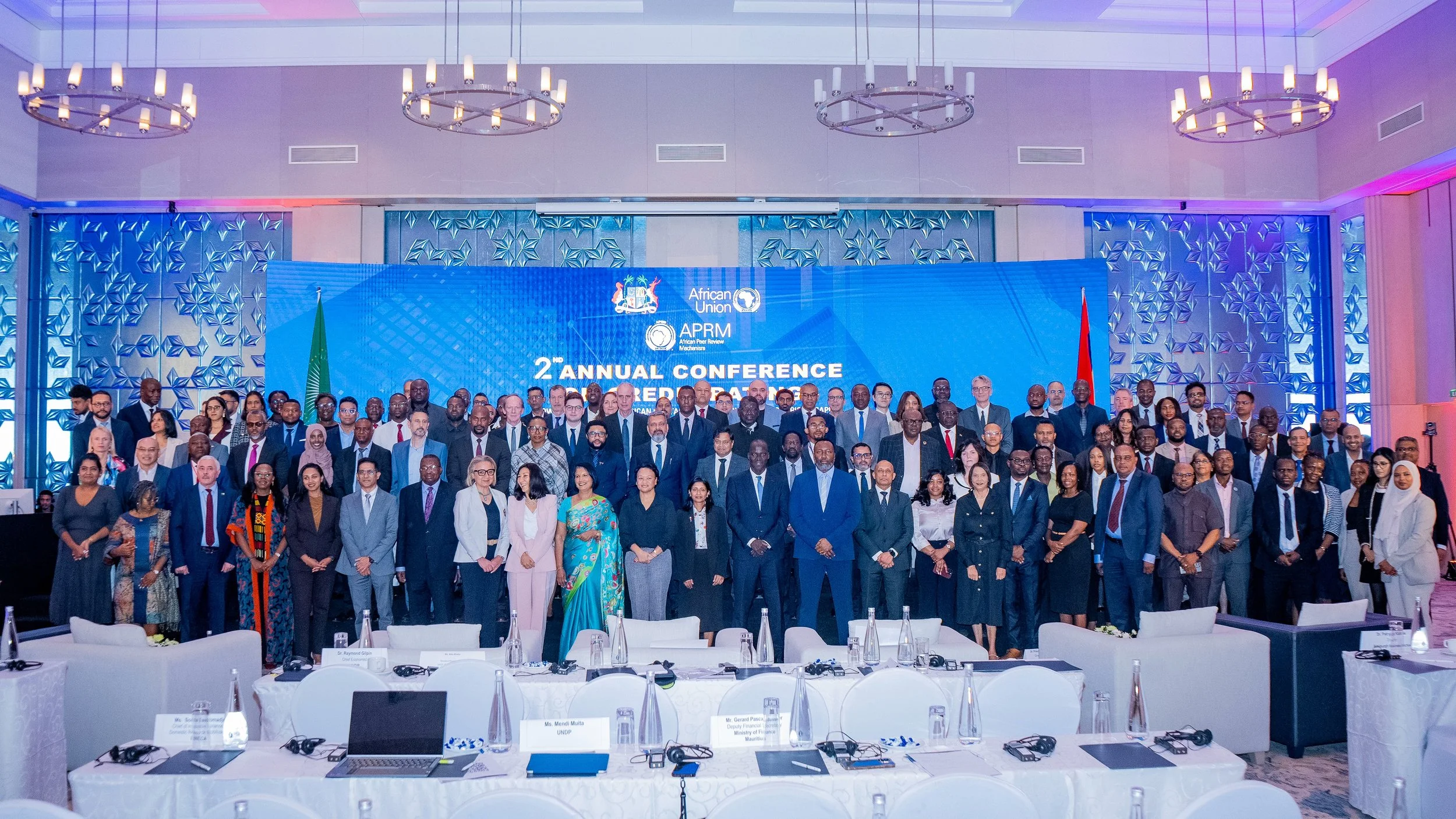
It was announced today that the Annual Conference on Credit Ratings will now meet every year, and that Mauritius will be its home for the foreseeable future. In the room it passed as housekeeping, the sort of notice that sits between a coffee break and the next panel, and I wrote it down without much thought. By the close of the day, having listened to APRM, UNDP, the African Legal Support Facility, finance ministries, central bankers and the credit rating agencies themselves, I had come to read it differently. It looked like one small indicator of something larger. African institutions appear to be building infrastructure around the understanding of credit ratings.
The permanence is what interests me. Conferences on credit ratings are not new, and most leave little behind them beyond a communiqué. A recurring meeting behaves differently. The same officials return, and they return carrying what they learned the year before. Relationships that began over lunch become working relationships. Questions asked in general terms one year get asked with precision the next, because the people asking them have had twelve months to test their assumptions against practice. Over time a subject that appeared episodically on policy agendas acquires something closer to a community of practice, with its own memory and its own standards of conversation. I would not want to inflate this, since a venue is only a venue. Yet, repetition is how expertise settles into institutions, and Mauritius becomes interesting as the place to which such a community keeps returning.
AfCRA is close to launch and naturally draws the eye, yet the rest of the day suggested something broader growing around it. The African Legal Support Facility set out further detail on its developing initiative on sovereign credit ratings, which means another major African institution is committing resources and attention to capability in this field. UNDP's work was visible from the opening remarks onwards. I have a history with that programme and am wary of overreading the prominence of work I know well, yet its presence alongside APRM, ALSF and the others is part of a pattern that no single organisation accounts for. Then there was the programme itself. One afternoon session carried the title "Rating Education and Financial Literacy", with a stated aim of bridging knowledge gaps among governments, state-owned enterprises, investors and regulators, and of improving engagement with rating processes. It is a modest title. What it describes is a deliberate decision to treat knowledge about ratings as something to be built and distributed.
Much of the public argument about Africa and credit ratings has, understandably, concerned outcomes. Debate has turned on whether a given rating was fair, whether a downgrade was justified, and whether methodologies designed elsewhere properly grasp the economies they assess. Those questions still matter, and I have spent a good part of my career asking versions of them. What occurred to me today was how much of the attention in the room had moved upstream. Speakers wanted to know how ratings are actually produced, how a methodology works in operation, what information credit rating agencies expect and in what form, how a finance ministry should organise its engagement with analysts, and where judgement enters a process often presented as mechanical. They also wanted to understand how ratings interact with the development of domestic capital markets, the thread to which the programme kept returning.
None of this begins from ignorance. African treasuries have dealt with credit rating agencies for decades, and many officials in that room know the process intimately. The change I am describing concerns how that knowledge is held. Where it once sat with a handful of individuals in a handful of ministries, it is increasingly being written into programmes, institutions, and recurring meetings, which means it can survive a change of minister or the departure of a debt management director.
It should be said plainly what this does not achieve. Knowledge of the rating process gives a government no control over its rating, and it should not. A sovereign able to determine its own grade would have destroyed the value of the grade. Understanding a methodology does not guarantee an upgrade, prevent a downgrade, or end disagreement with an analyst (at least not on its own) Nor does it touch the structural questions about the industry. Three firms still dominate it, methodologies do not change because the rated have read them more closely, and legitimate arguments about the reach of credit rating agencies over development finance remain exactly where they stood this morning.
There is also a risk worth stating openly. Rating education can slide into compliance training, a programme for teaching governments to present themselves in the shape external evaluators prefer. If that is what it becomes, the effort will have been poorly spent. The more valuable outcome runs the other way. A government that understands how an assessment is constructed is better placed to organise its information, to see where an analyst's assumptions sit, to contest the ones it judges wrong, and to reach its own view of what its creditworthiness rests on. Understanding a system should raise the quality of the questions put to it, and the capacity to participate and the capacity to interrogate draw on the same knowledge.
I have argued for years that credit ratings exert real influence over the terms on which development is financed. If that is right, the capacity to understand how creditworthiness is evaluated belongs to financial institutional development in the same way that a functioning debt office or a credible statistical agency does. It is unglamorous work, and it produces neither headlines nor upgrades. Its value lies in the accumulation of people and institutions able to read the rating system with growing sophistication, and that accumulation will matter whatever becomes of any single initiative, including the ones I care about most.
Walking out of the InterContinental at Balaclava this evening, I kept returning to the distance between being evaluated and comprehending the evaluation. I have had my 11th book contracted by Palgrave Macmillan looking at exactly this concept I am building in my current work, off the back of my 10th book I have just submitted before flying solely focused on the evaluative power of the Credit Rating Committee. The many layers of evaluation and the structures that surround it – both ‘evaluative power’ and ‘evaluative capability’ – are increasingly staying in my vision and today only added to that. Being evaluated is imposed from outside and the modern environment surrounding a sovereign is becoming increasingly evaluative. The second element of comprehending that increasing evaluative environment has to be built, patiently, by institutions that intend to stay. What I saw today, in an announcement about dates, a legal facility's initiative and a session on education, looked like the early work of building it, and Mauritius may prove to be one of the places where that work is done, year after year, for the benefit of an entire continent.